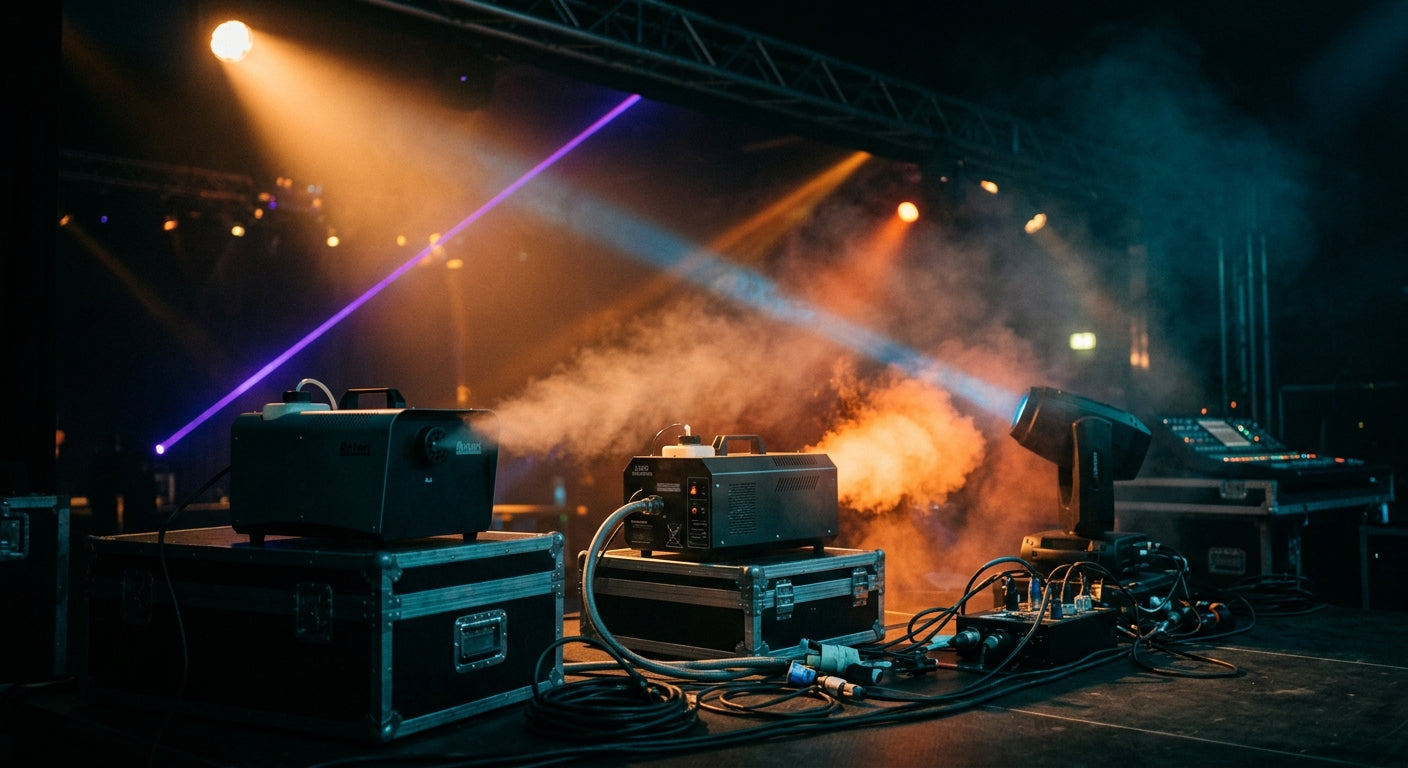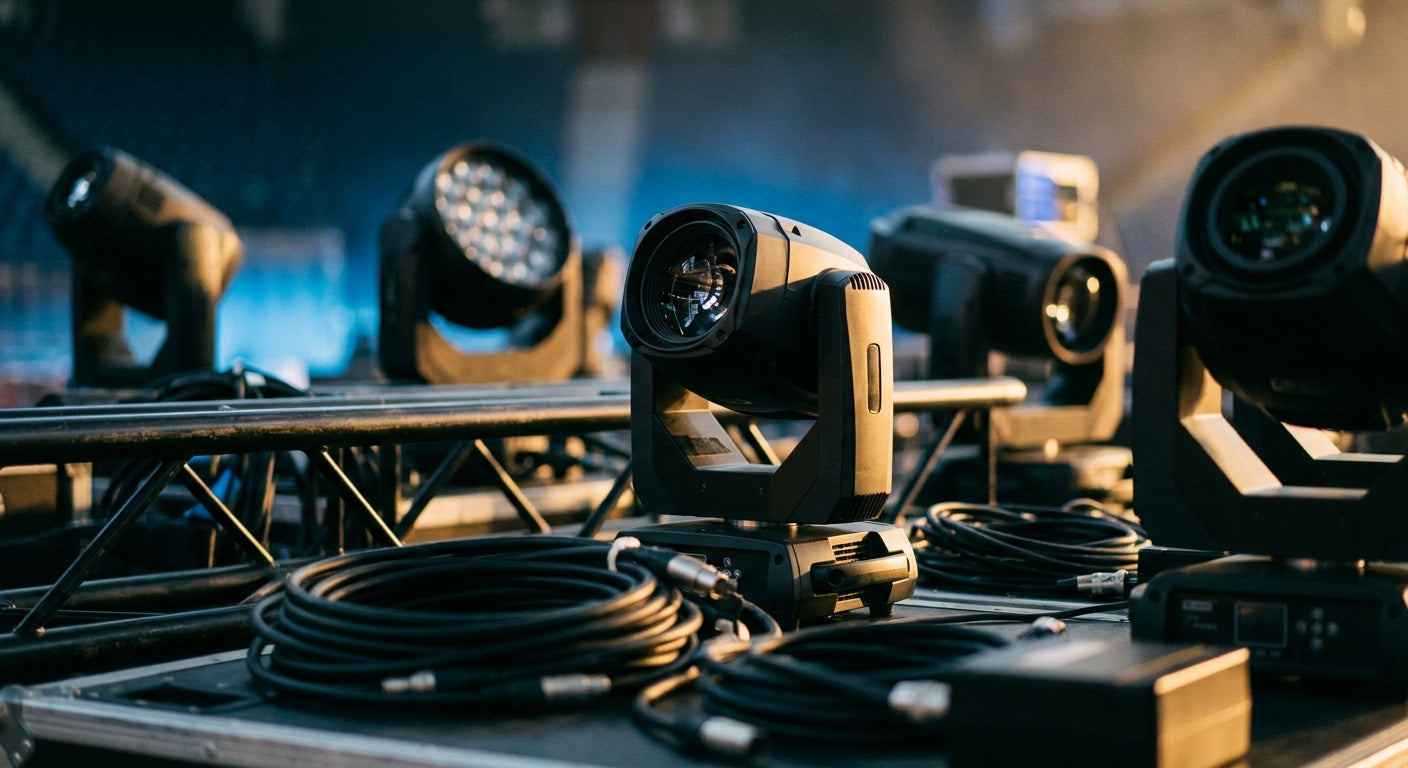


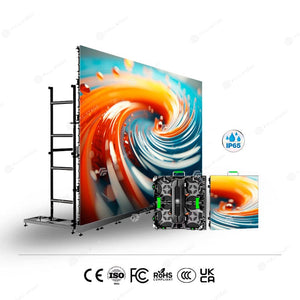
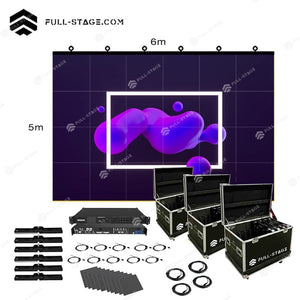


- Strobe LED 1080 RGB: 250W, 3 DMX channels
- 7x15W LED Par Light: IP65, 512 DMX channels
- 250W Bee Eye Beam: 250W, 512 DMX channels
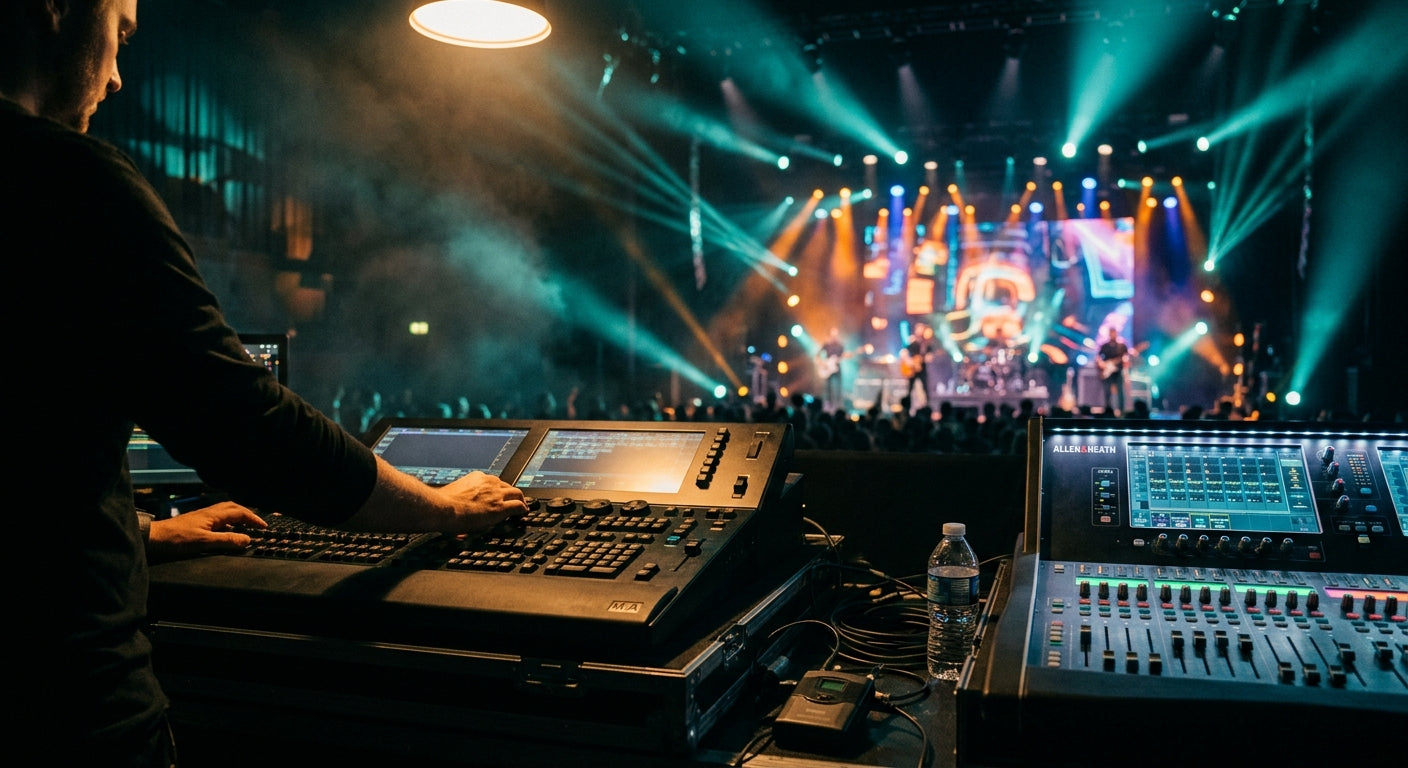
- I7MA Dark Horse Console: 512 DMX channels
In this article
Context/buyer problem
As lighting equipment manufacturers, we understand that one of the most common questions lighting technicians and DJs face is what type of light they need and how many units are required to adequately cover a venue. This decision affects not only the quality of the show, but also the logistics and budget of the event.
Choosing the right equipment can be a challenge, especially when considering the variety of options available on the market. From strobe lights to par cans and beams, each type of light has its own characteristics that can influence the atmosphere of the event. For example, the 12-Segment 1080 RGB LED Strobe offers a power of 250W and a zoom angle of 100° to 240°, making it ideal for creating impactful effects at concerts and festivals.
Additionally, factors such as the number of DMX channels, beam angle, and IP rating can determine the flexibility and durability of the equipment in different environments. The 7x15W IP65 LED Par Light, with its 512 DMX channels and IP65 rating, is perfect for outdoor events where weather conditions can be unpredictable.
Understanding these technical specifications is crucial for optimizing equipment use and maximizing the visual impact of the event. In the following sections, we will explore how to choose the right fixtures and how these decisions can influence the success of your production. Furthermore, it is important to consider the compatibility of the equipment with existing control systems, as well as the technicians' ability to operate them efficiently. Training and familiarity with the equipment can make the difference in executing a successful event.
Technical comparison with table
To facilitate the choice of the right fixtures, it is essential to compare the technical specifications of the available products. Below, we present a comparison table of some of our featured products:
| Model | Power (W) | Beam Angle | DMX Channels | IP Rating |
|---|---|---|---|---|
| Strobe LED 1080 RGB | 250 | 100°-240° | 3 | N/A |
| 7x15W LED Par Light | 130 | 90°-260° | 512 | IP65 |
| 250W Bee Eye Beam | 250 | 90°-260° | 512 | IP20 |
| 9x18W LED Par Light | 150 | 6°-10° | 512 | IP65 |
This table clearly shows the differences in power, beam angle, DMX channels, and IP rating. For example, the Wireless 9x18W RGBWAP LED Par Light offers a power of 150W with a beam angle of 6° to 10°, ideal for applications that require a narrower and more precise focus.
When choosing between these models, it is important to consider not only the technical specifications, but also the type of event and the environment in which they will be used. For example, for indoor events where ambient control is crucial, a fixture with an adjustable beam angle can provide the flexibility needed to adapt to different stage configurations.
In addition, the ability to integrate with advanced control systems, such as those offering multiple DMX channels, allows for more detailed customization of lighting effects, thereby enhancing the audience experience.
What most people don't consider
When planning lighting for an event, many technicians focus solely on basic technical specifications such as power and beam angle. However, there are other equally important factors that are often overlooked.
The IP rating, for example, is a critical aspect if the event is to be held outdoors. A fixture with an IP65 rating, like the 7x15W LED Par Light, is designed to withstand dust and rain, making it ideal for outdoor events.
Another aspect that is not always considered is the lifespan of the lamps. A fixture with a long lifespan can offer a better long-term return on investment. The Wireless 9x18W RGBWAP LED Par Light, for example, has a lifespan of 80,000 hours, which means fewer replacements and less maintenance.
Finally, the weight of the equipment can influence the logistics of assembly and disassembly. Opting for lighter fixtures can facilitate transport and installation, reducing the time and effort required to prepare for the event. On the other hand, energy efficiency is a factor that can have a significant impact on operating costs. Equipment that consumes less energy is not only more sustainable, but can also reduce electricity bills, especially in long-duration events.
Lastly, ease of maintenance and the availability of spare parts are practical considerations that can affect the continuity of lighting operations over time.
Applications by use case
USE CASES Each type of fixture has specific applications that can maximize its effectiveness in different scenarios. Below, we explore some common use cases:
The 7x15W IP65 LED Par Light is ideal for outdoor concerts. Its high IP rating ensures resistance to harsh weather conditions.
For indoor events, the Strobe LED 1080 RGB offers impactful visual effects with its powerful light output and adjustable beam angle.
The Wireless 9x18W RGBWAP LED Par Light is perfect for theatrical applications, where precise and controlled lighting is required.
Each application requires considering not only the technical specifications, but also the context of the event and the environmental conditions. In concert events, synchronizing lights with music is crucial to creating an immersive experience. Equipment like the 250W Bee Eye Beam can be used to create dynamic and focused effects that enhance the visual impact of live performances. For corporate events, where aesthetics and presentation are key, selecting lights that allow for precise color adjustments and smooth transitions is essential. In the theatrical realm, the ability of the fixtures to reproduce a wide range of colors and create sharp shadows can be the difference between a mediocre production and a spectacular one.
Decision table
DECISIONS Selecting the right equipment can be a challenge without a clear guide. Below, we present a decision table to help technicians choose the right fixture according to their specific needs:
| Requirement | Recommended Fixture | Reason |
|---|---|---|
| High weather resistance | 7x15W IP65 LED Par Light | IP65, ideal for outdoors |
| High visual impact | Strobe LED 1080 RGB | Powerful 250W output |
| Advanced DMX control | I7MA Dark Horse Console | 512 DMX channels |
| Precise lighting | 9x18W LED Par Light | Adjustable beam angle |
This table provides a quick reference for aligning event needs with our product capabilities. It is also important to consider technical support and the availability of software updates for control equipment, such as the I7MA Dark Horse Console, which not only offers advanced control through its 512 DMX channels, but can also be easily integrated with other lighting systems to create a cohesive environment. Compatibility with modern network protocols and the potential for future expansion are aspects that can influence the purchasing decision, ensuring that the investment is sustainable in the long term.
Costs and logistics
The cost and logistics of implementing a lighting system can be as complex as selecting the equipment itself. When considering the total investment, it is essential to take into account not only the purchase price, but also long-term operating and maintenance costs.
The Wireless 9x18W RGBWAP LED Par Light is an example of a fixture that, while it may have a higher initial cost, offers an 80,000-hour lifespan, which significantly reduces replacement and maintenance costs. Additionally, logistics for transport and installation must be considered.
For personalized technical advice on how to optimize your costs and logistics, contact us.
Request technical advice Speak with a virtual assistantCommon mistakes to avoid
In our experience as manufacturers, we have identified several common mistakes that lighting technicians and DJs should avoid to ensure the success of their event. One of the most frequent errors is failing to consider the event environment when selecting fixtures.
For example, using equipment with a low IP rating at outdoor events can result in failures due to exposure to elements like rain and dust. Another mistake is underestimating the importance of DMX control. Not using an appropriate controller, such as the I7MA Dark Horse Console, can limit the ability to create complex and coordinated lighting effects.
Finally, failing to properly plan for assembly and disassembly can lead to delays and additional costs. It is crucial to have a detailed logistics plan that considers the time and resources required for these tasks. Furthermore, the lack of pre-testing and adjustments during rehearsals can result in unanticipated technical issues during the event.
Ensuring that all equipment is correctly configured and tested before the event begins is vital to avoid interruptions. It is also essential to have a technical support team available to resolve any unforeseen issues that may arise during the event.
To avoid these mistakes and receive a personalized quote, contact us today.
Request a quote Speak with a virtual assistant