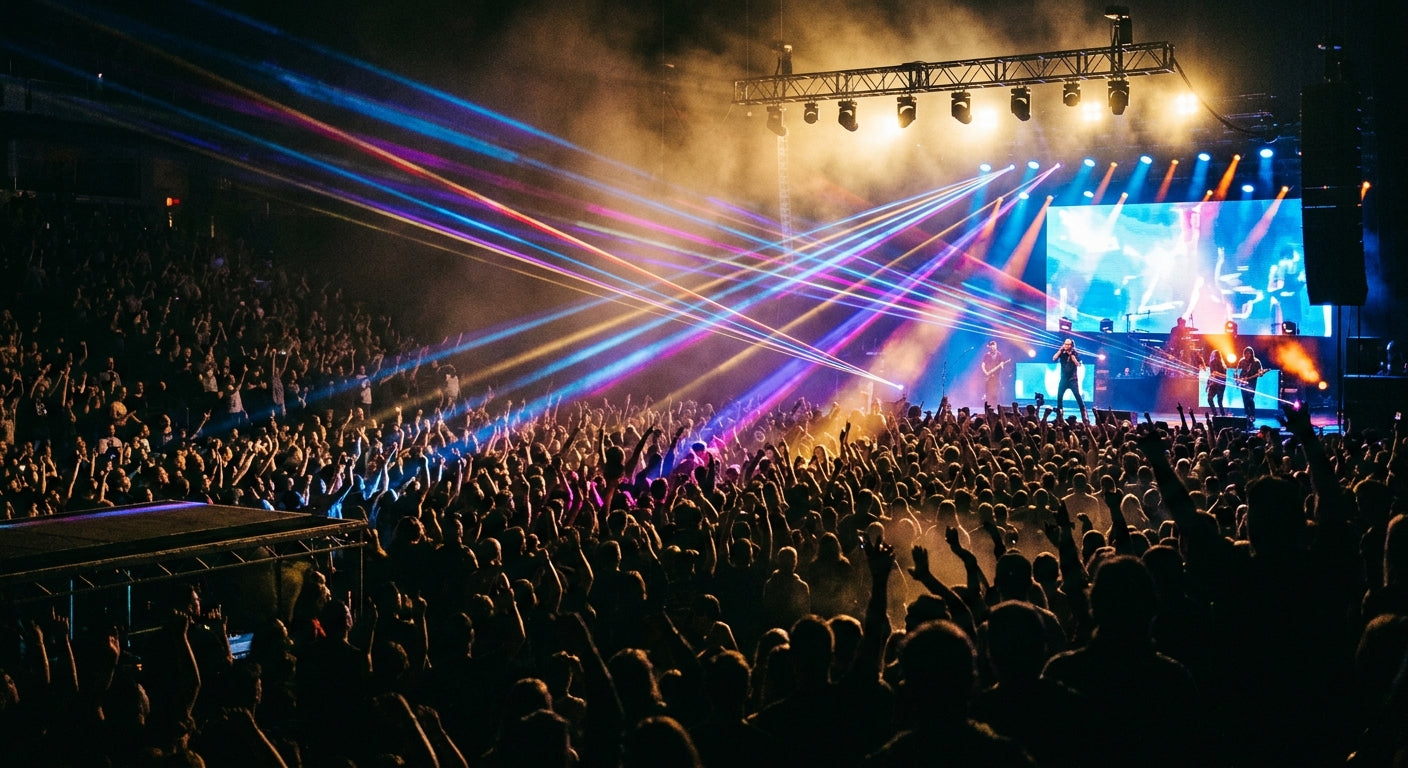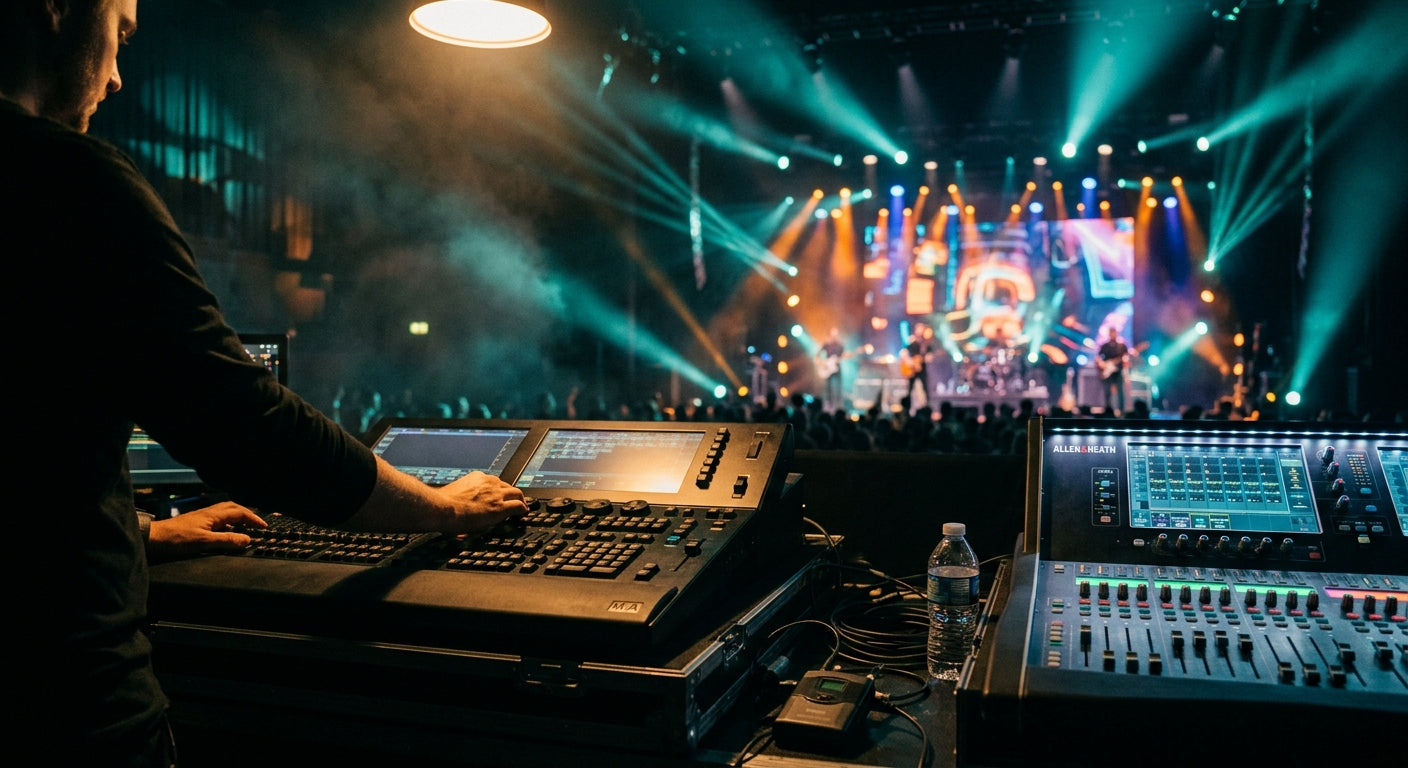




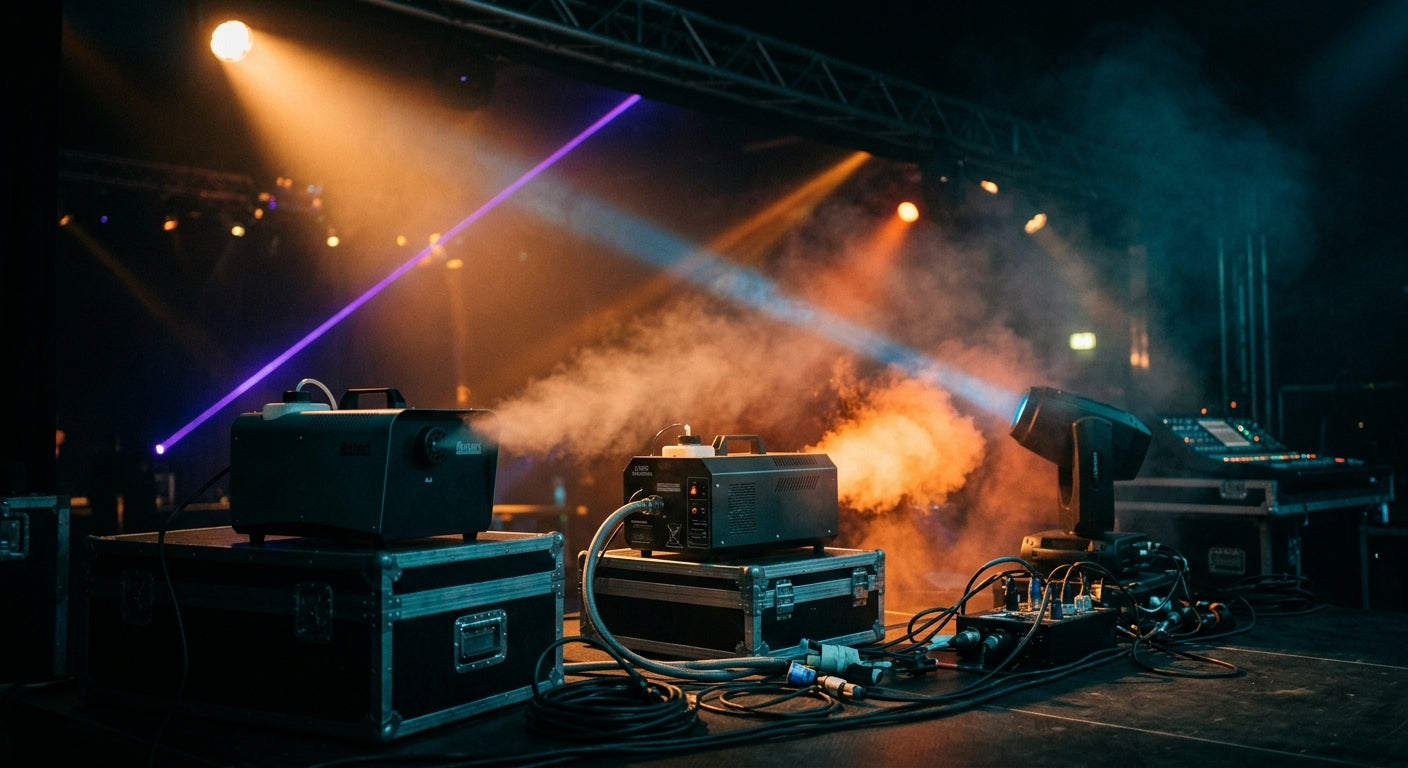
In the world of event production, the visual and sensory environment is fundamental to ensuring a memorable experience. Two key elements that contribute significantly to this atmosphere are hazers and foggers. Although they are often used interchangeably, understanding their technical differences and specific applications can transform an event from ordinary to extraordinary. As manufacturers of professional AV equipment, we see how our clients face the challenge of choosing the right equipment for their productions. This article breaks down the differences between hazers and foggers, helping event organizers make informed decisions to create the perfect atmospheric effect.
In this article
Context/buyer problem
One of the main challenges event organizers face is creating an atmosphere that captures the audience's attention and complements the event's theme. In this context, choosing between a hazer and a fogger may seem like a trivial decision, but it has a significant impact on the end result. Hazers, known for producing a fine mist that highlights lighting without obstructing the view, are ideal for events where clear visibility is crucial. On the other hand, foggers generate a denser cloud of smoke, perfect for dramatic effects or for concealing elements that will be revealed later.
Problems arise when event organizers are not clear about which of these devices is most suitable for their specific needs. This can lead to situations where visibility is compromised or the desired effect is not achieved correctly. Furthermore, a lack of understanding regarding fluid consumption and the power needed to operate these devices can result in unexpected costs and logistical challenges.
Working with our clients, we have observed that incorrect equipment selection not only affects the aesthetics of the event, but can also negatively impact the audience's perception and the organizer's reputation. Therefore, it is essential to have solid knowledge about the capabilities and limitations of hazers and foggers to optimize event production.
Technical comparison
To offer a clear view of the technical differences between hazers and foggers, we have prepared the following comparison table detailing key aspects such as the type of smoke, dispersion time, and fluid consumption.
| Characteristic | Hazer | Fogger |
|---|---|---|
| Smoke type | Fine mist | Dense cloud |
| Dispersion time | Slow and steady | Fast and dense |
| Fluid consumption | Low | High |
| Visibility | High | Low |
| Typical use | Highlighting lights | Special effects |
Hazers are preferred in contexts where visibility and lighting play a crucial role, such as concerts and corporate events. Conversely, foggers are more suitable for theatrical productions or shows that require an element of surprise. By considering these technical factors, organizers can choose the equipment that best suits their specific needs.
What most people don't consider
One aspect often overlooked when choosing between a hazer and a fogger is the impact on the venue's ventilation system. Because hazers produce a fine mist, they are less likely to trigger smoke detectors, making them safer for indoor venues without specialized ventilation systems. On the other hand, foggers can trigger fire alarms if care is not taken.
Another important point is maintenance. Hazers tend to require less maintenance due to their lower fluid consumption and the nature of their operation. However, this does not mean that regular maintenance should be ignored, as proper care ensures a longer service life and optimal performance.
Finally, operating noise is a factor that many overlook. Hazers usually operate more quietly than foggers, making them ideal for environments where noise could interfere with the audience's experience, such as conferences and presentations.
Applications by use case
- Concerts and festivals: Hazers are ideal for these events due to their ability to highlight lighting effects without obstructing the stage view.
- Theaters and stage productions: Foggers are preferred here to create dramatic effects and dense atmospheres that complement the visual narrative.
- Corporate events: A hazer is the perfect choice to maintain visual clarity while enhancing the event's visual aspects, such as presentations and speeches.
- Film and television productions: Depending on the desired effect, both devices can be useful, but foggers are especially useful for creating suspenseful or mysterious atmospheres.
- Theme parks and attractions: Foggers are commonly used to generate surprising and immersive effects in themed attractions.
Understanding the specific purpose of each event helps organizers select the right device, ensuring that the created atmosphere best adapts to the audience's expectations.
Decision table
The following decision table provides a quick guide to help event organizers choose between a hazer and a fogger according to their specific needs.
| Criterion | Recommendation |
|---|---|
| High visibility | Hazer |
| Dramatic effect | Fogger |
| Low fluid consumption | Hazer |
| Outdoor events | Fogger |
| Quiet environments | Hazer |
This type of information can be invaluable when planning an event, allowing organizers to make informed decisions quickly and effectively. The right choice not only improves the audience experience but also optimizes the resources used during production.
Costs and logistics
When planning an event, the costs associated with using hazers and foggers must be carefully considered. Although hazers usually have lower fluid consumption, the initial cost of the equipment can be higher due to its more advanced technology. On the other hand, foggers, while more economical initially, can incur higher operating costs due to their greater fluid consumption.
Logistics also play a crucial role. Hazers, being more compact and lightweight, are easier to transport and set up, making them ideal for touring events. In contrast, foggers may require more personnel to handle them due to their size and the additional weight of the necessary fluid.
When evaluating both aspects, organizers must balance the overall budget of the event with the specific needs of the event. Advanced planning and an understanding of these logistical factors can help mitigate unexpected costs and ensure a smooth event.
For personalized technical advice on the right equipment for your next event, contact us today.
Request technical adviceCommon mistakes to avoid
When working with hazers and foggers, there are several common mistakes that can negatively affect the outcome of an event. Here we highlight some of them:
- Underestimating warm-up time: Both hazers and foggers require a warm-up time before they are ready for use. Not taking this into account can delay the start of the event.
- Ignoring safety specifications: Not following the manufacturer's recommendations regarding ventilation and safe use can result in alarm triggers or dangerous situations.
- Not considering operating noise: Choosing a fogger for an event where silence is crucial can result in an unnecessary distraction.
- Forgetting regular maintenance: Lack of maintenance can lead to equipment failure in the middle of an event, causing unwanted interruptions.
- Miscalculating fluid consumption: Not providing the proper amount of fluid can result in an interruption of the desired atmospheric effect.
Avoiding these mistakes through careful planning and a deep understanding of the equipment can significantly improve the quality and success of an event.
To get a personalized quote for our hazer and fogger equipment, click below.
Request a quote