




In the world of events, choosing the right LED display can make the difference between a mediocre show and an impressive one. Event organizers seek solutions that are not only visually appealing but also reliable and adaptable to various conditions. At Full-Stage.com, as manufacturers of professional AV equipment, we understand the specific needs of our clients and offer a range of LED displays designed to meet the highest quality standards.
- LED displays are essential at events for their brightness and versatility.
- Comparing technical specifications is key for an informed choice.
- Considering specific applications and avoiding common mistakes improves the outcome.
In this article
Context and buyer problem
Event organizers face significant challenges when selecting suitable LED displays for their productions. The need for equipment that offers excellent visibility in different lighting and weather conditions is paramount. Additionally, technical aspects such as pixel pitch, brightness, and refresh rate play a crucial role in the quality of the projected image. A common mistake is underestimating the importance of these factors, which can result in a poor visual experience for the audience.
The market offers a wide range of options, from indoor displays with moderate brightness to outdoor displays capable of competing with direct sunlight. However, not all displays are the same, and choosing the wrong one can lead to technical problems, such as blurry images or washed-out colors. Therefore, it is vital for organizers to understand the technical specifications and how they align with their specific needs.
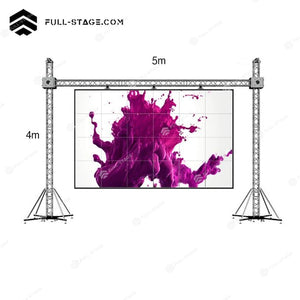
Moreover, the logistics of installing and dismantling LED displays is also a determining factor. Displays must be easy to set up and take down, especially at events where time is limited. Durability and resistance to adverse weather conditions are also key considerations, especially for outdoor events. In summary, choosing the right LED display is a complex process that requires careful evaluation of the event's needs and the technical specifications of the available equipment.
Technical comparison of LED displays
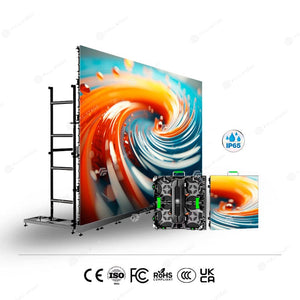
When considering which LED display is suitable for an event, it is essential to compare the technical specifications of the different models available. Factors such as pixel pitch, brightness, refresh rate, and IP rating are decisive in the final choice. Below, we present a comparative table of some of the most popular models from Full-Stage.com.
| Model | Pitch (mm) | Brightness (nits) | IP | Refresh (Hz) |
|---|---|---|---|---|
| Outdoor LED Display P4.81 | 4.81 | 4500 | IP65 | 6400-7680 |
| Outdoor LED Display P2.6 | 2.604 | 4500 | IP65 | 3840-7680 |
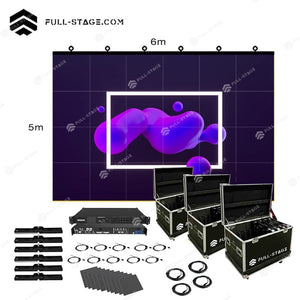
| Outdoor Advertising LED Display P5 | 5 | 10000 | IP65 | 6400-7680 |
As can be seen, the P5 model offers an exceptionally high brightness of 10000 nits, ideal for outdoor advertising in brightly lit environments. On the other hand, the P2.6 model, with its lower pixel pitch, is perfect for events that require high resolution and detail in the image. Each model has its advantages depending on the context of the event, and it is crucial to choose the one that best fits the specific needs.
What most people overlook
When it comes to LED displays for events, there are less obvious factors that can significantly impact the success of the event. One of them is thermal management. LED displays generate heat, and inadequate management can affect their performance and longevity. It is essential to ensure that the displays are equipped with adequate ventilation systems.
Another aspect that is often overlooked is the viewing angle. Displays with wide viewing angles ensure that the content is visible from different positions, which is crucial at large events where the audience is dispersed. Additionally, durability against adverse weather conditions is vital for outdoor events. Displays with an IP65 rating, such as those from Full-Stage.com, are designed to withstand dust and water, ensuring reliable operation even in challenging conditions.
Applications by use case
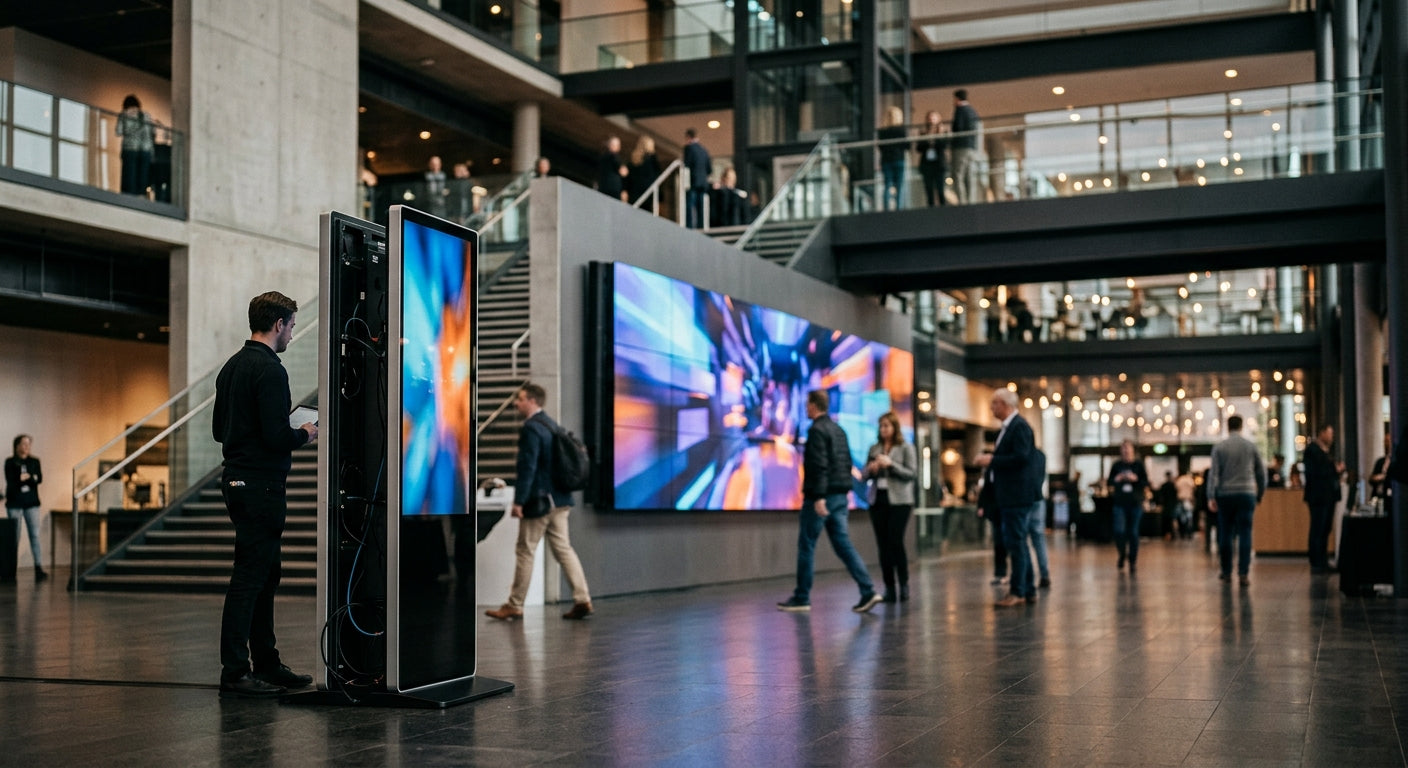
LED displays have versatile applications in events, from concerts and conferences to trade shows and sports events. Here we explore how they can be effectively implemented in different scenarios.
At concerts, LED displays are used to broadcast live images from the stage, enhance the visual experience for the audience, and provide visual effects synchronized with the music.
At conferences, displays are used to show presentations, graphics, and videos that complement the speaker's content, ensuring that all attendees can clearly follow the event.
At trade shows, LED displays are effective tools for attracting visitors' attention, showcasing promotional content and product demonstrations.
Decision table
To facilitate the choice of the right LED display, below is a decision table summarizing the key features and ideal applications of each model.
| Model | Ideal Application | Main Advantage |
|---|---|---|
| Outdoor LED Display P4.81 | Outdoor events | High resistance to weather conditions |
| Outdoor LED Display P2.6 | High-definition events | Excellent resolution |
| Outdoor Advertising LED Display P5 | Outdoor advertising | Exceptional brightness |
This table helps organizers quickly identify which model can best meet the needs of their specific event, considering both the environment and the type of content to be displayed.
Costs and logistics
The cost and logistics of implementing LED displays at an event are critical considerations. The price of displays varies depending on size, resolution, and technical specifications. In addition to the initial acquisition cost, it is important to consider installation, maintenance, and operational expenses.
Logistics involves not only transporting the displays to the event location but also their installation and dismantling. It is advisable to work with suppliers who offer technical support and maintenance services to ensure that the displays operate optimally throughout the event.
Get personalized technical advice for your next event.
Request technical advice Talk to virtual assistantCommon mistakes to avoid
When implementing LED displays at events, it is easy to make mistakes that can negatively affect the final outcome. Below are some of the most common mistakes and how to avoid them.
1. Underestimating the necessary brightness: Not considering the lighting environment can result in a display that is not adequately visible. Make sure to choose a display with sufficient brightness for the environment.
2. Ignoring the viewing angle: Selecting a display with a limited viewing angle can leave parts of the audience without a clear view. Opt for displays with wide viewing angles.
3. Not planning logistics: Lack of planning in transportation and installation can cause delays. Coordinate all logistical aspects in advance.
4. Not considering technical compatibility: Ensure that the displays are compatible with the rest of the technical equipment of the event to avoid integration issues.
5. Unaware of weather conditions: For outdoor events, choose displays with the appropriate IP certification to withstand weather conditions.