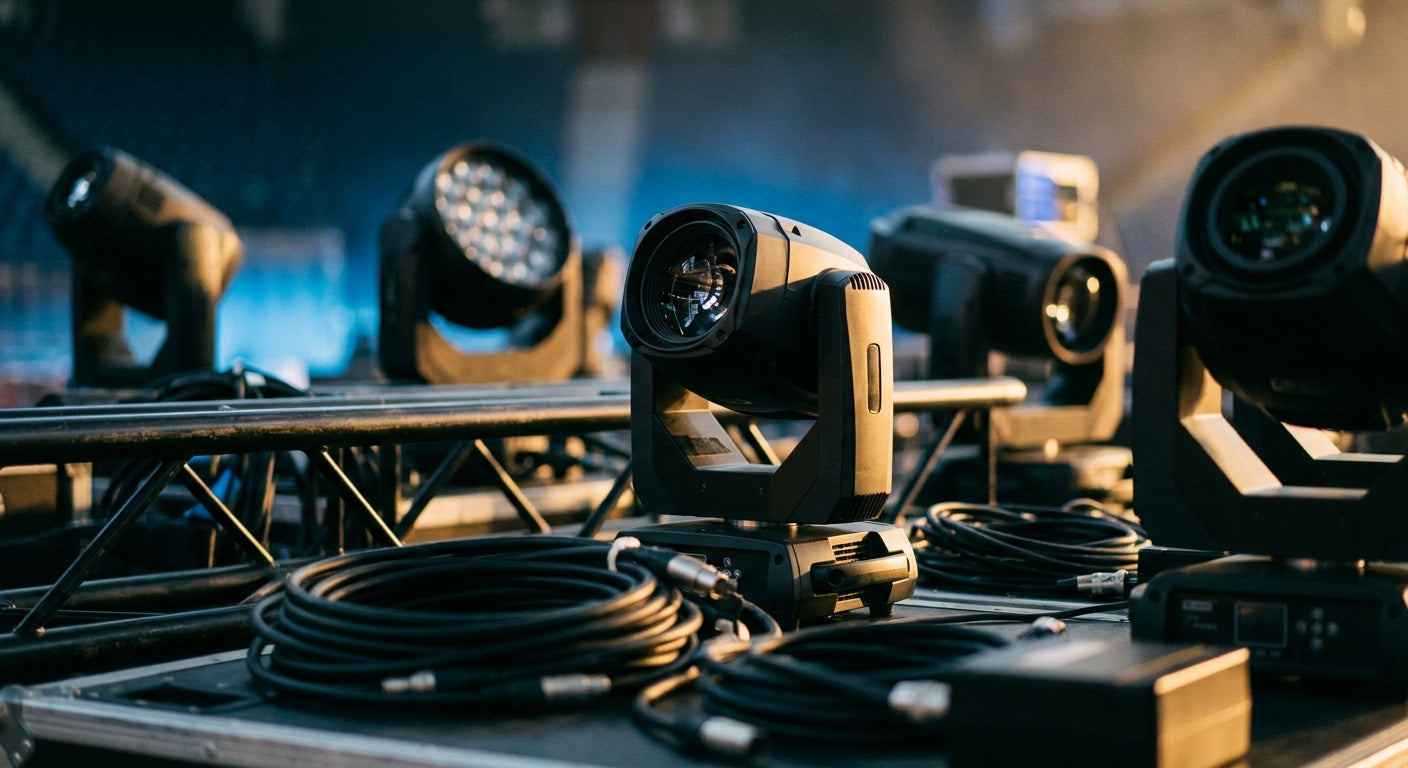




- The DMX512 protocol is key for controlling lights at events.
- Understanding the types of fixtures and their coverage is essential.
- DMX channels determine the complexity of lighting control.
- The choice of lights depends on the size and type of venue.
In this article
Context / buyer's problem
As manufacturers of lighting equipment, the most frequent inquiry we receive is not about the price of our lights. It is about the type and quantity of lights needed to cover a specific space. Lighting technicians and DJs face the challenge of selecting the right lights for their events, considering the type of venue and the desired effect.
The DMX512 protocol is an industry standard that allows precise control of multiple lights from a single console. Understanding how to use it effectively and which fixtures to choose can be complex. The wrong choice of lights can lead to poor lighting. This not only affects the aesthetics of the event but also the viewer's experience. For example, using lights with a very narrow beam angle in a large hall can result in dark and poorly lit areas. Additionally, the number of DMX channels that each fixture requires is crucial for planning the control infrastructure.
Devices that use many channels can offer more control. They also require more detailed planning. DMX512 allows control of up to 512 channels. It offers unmatched flexibility. Each channel can handle a specific parameter of the light, such as intensity, color, or movement.
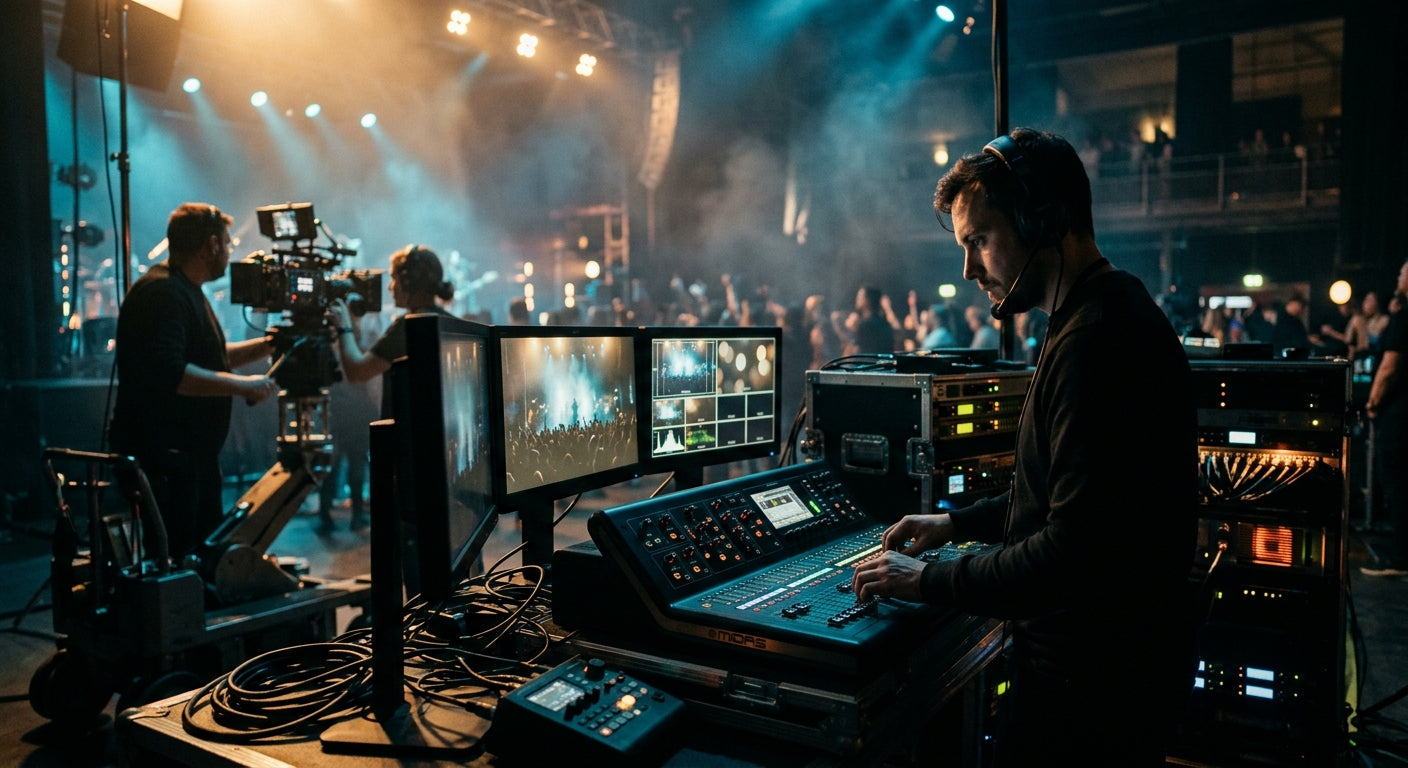
In complex events, such as concerts or festivals, where multiple fixtures are used simultaneously, the ability to assign and manage these channels efficiently is critical. A light show synchronized with music requires precise and rapid adjustments. The DMX512 protocol facilitates this by allowing the programming of complex sequences in real-time.
Technical comparison with table
Selecting the right fixtures depends on several technical factors, such as power, beam angle, DMX channels, and IP rating. Below, we present a comparison of some of our most popular products to help you decide which best fits your needs.
| Model | Power (W) | Beam Angle | DMX Channels | IP Rating |
|---|---|---|---|---|
| Wireless 9x18W RGBWAP LED Par Light | 150W | 6.00°-10.00° | 512 | IP65 |
| Beam Lamp Nightless Sky 230W Phoenix | 230W | 100.00°-240.00° | 512 | IP20 |
| Strobe Led White Light 5 Cores 1000W | 1000W | 90.00°-260.00° | 512 | IP20 |
| 19x40W LED Moving Head Wash Light | 40W | 1.00°-25.00° | 512 | IP20 |
The IP rating indicates the device's resistance to elements such as dust and water. It is crucial for outdoor events. A fixture like the Wireless 9x18W RGBWAP LED Par Light with an IP65 rating is ideal for outdoors.
Other models with IP20 are more suitable for indoors. When considering power, it is important to understand that it is not only about energy consumption but also about the brightness that the fixture can provide. For example, the 1000W Strobe Led White Light offers impressive light intensity. It is suitable for large events that require a strong visual impact.
In contrast, lights with lower power, such as the 19x40W LED Moving Head Wash Light, are ideal for creating movement and color effects in more controlled spaces, such as theaters or television studios. The choice of the right power should align with the purpose and environment of the event.
What most people overlook
When planning lighting for an event, many technicians and DJs focus on the power and cost of the lights. They often overlook critical aspects such as beam angle and space coverage. These factors can determine the success or failure of an event's lighting. A wider beam angle can cover more area, reducing the number of lights needed, but may not be suitable for specific effects like spotlights.
Additionally, the efficient use of DMX channels is fundamental. Each fixture has a specific number of channels it uses to control various parameters, from color to movement. Properly planning the use of these channels can optimize the lighting setup and allow for more creative and dynamic control during the event.
Another aspect that is often overlooked is the synchronization of lights with other elements of the event, such as music or additional visual effects. This requires not only a deep understanding of the available DMX channels but also how they can integrate with advanced lighting control software. Tools like programmable DMX consoles allow for the creation of predefined scenes that can be activated precisely during the event, enhancing the viewer's experience and ensuring visual and auditory cohesion.
Applications by use case
Different types of events require different lighting setups. Here we show you how some of our lights can adapt to various scenarios.
For outdoor concerts, where weather conditions can be unpredictable, the Wireless 9x18W RGBWAP LED Par Light is ideal due to its IP65 rating, ensuring durability.
In theaters, where color precision is key, the RGBALC 400W Fresnel Spotlight offers a wide range of colors thanks to its RGBALC technology.
For corporate events, the 19x40W LED Moving Head Wash Light provides flexibility in movement and effects, ideal for creating dynamic environments.
Each application has its own needs and challenges. Selecting the right fixture can make a significant difference in the quality and impact of the event.
In fashion events, where lighting must highlight the textures and colors of garments, using lights with a high CRI (Color Rendering Index) is essential. This ensures that colors are displayed accurately and vibrantly. In such cases, fixtures like Fresnel spotlights with RGBALC capability are ideal, as they allow for adjusting color temperature and intensity to achieve the desired effect. Flexibility in lighting setup not only enhances product presentation but also contributes to the overall atmosphere of the event.
Decision table
Choosing the right light involves considering several factors. Below, we present a decision table that will help you determine which fixture is most suitable for your event.
| Criterion | Option 1 | Option 2 | Option 3 |
|---|---|---|---|
| Outdoor Event | Wireless 9x18W RGBWAP LED Par Light | Strobe Led White Light 5 Cores 1000W | Beam Lamp Nightless Sky 230W Phoenix |
| Precise Color Control | RGBALC 400W Fresnel Spotlight | 19x40W LED Moving Head Wash Light | 200W IP20 COB LED Blinder |
| Dynamic Lighting | 19x40W LED Moving Head Wash Light | Beam Lamp Nightless Sky 230W Phoenix | 3000W STROBE BULB 220V |
This table provides a quick guide to making informed decisions based on the specific requirements of your event. It is essential to consider not only the physical environment of the event but also the visual impact that is desired. For example, at a music festival, where energy and excitement are key, a combination of strobe lights and moving heads can create an impressive show that captures the audience's attention. When evaluating options, it is also important to consider the compatibility of fixtures with existing control consoles and the ease of integration with other audio and video systems to ensure an immersive and cohesive experience.
Costs and logistics
Cost and logistics are important considerations when planning the lighting for an event. It is not only about the purchase price of the fixtures but also about installation, operation, and maintenance costs. Energy efficiency is another crucial factor, as it affects long-term operating costs.
The logistics of installation can be a challenge, especially at large events. Heavier fixtures or those that require more installation time can increase labor costs. Planning ahead and choosing lights that are easy to install and maintain can save time and money.
For personalized technical advice on which lights to choose for your event, contact us.
Request technical advice Talk to virtual assistantCommon mistakes to avoid
One of the most common mistakes is underestimating the number of lights needed for an event. This can result in insufficient lighting and a poor experience for attendees.
It is also common not to consider the IP rating when selecting lights for outdoor events, which can lead to equipment failures in adverse conditions. Another mistake is not properly planning the use of DMX channels.
This can limit the ability to control lights effectively, reducing the quality of the lighting show. Finally, not checking the compatibility of fixtures with the existing control system can cause integration and functionality issues. An additional mistake is not conducting pre-event tests.
Setting up and testing the lighting in advance allows for identifying and resolving technical issues before the event begins, ensuring everything runs smoothly.
Moreover, not considering the environmental impact of lighting, such as the heat generated by high-power lights, can affect attendee comfort, especially in enclosed spaces.
Opting for low-consumption LED lights not only reduces thermal impact but is also a more sustainable and economical option.
Ready to enhance your event's lighting? Request a quote today.
Request a quote Talk to virtual assistant